Delta-Neutral Carry — Print While You Sleep
// Long one venue, short another, collect the spread. Price doesn't matter — the gap does. Here's the play, the math, and the moments it bites.
Delta-neutral carry is the oldest play in the wasteland. You hold the same position on both sides at the same time — long here, short there — so price moves cancel out. What you're left with is the difference in funding between the two venues. When that difference is positive net of fees, the wire pays you to exist.
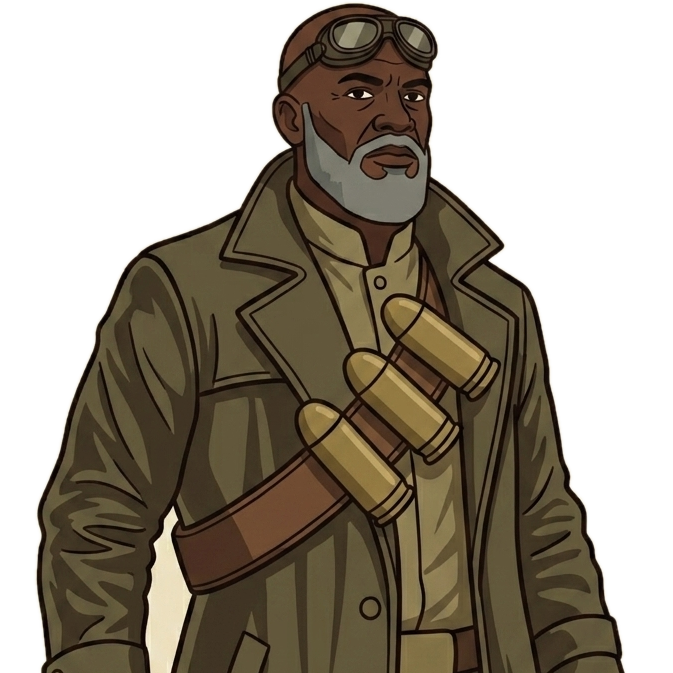
// THE PLAY
Two flavours. Pick one based on what you have access to.
Long-spot / short-perp. Buy the spot token outright. Short an equal notional of the perp on a venue that's paying shorts (positive funding). The spot has no funding. The short collects funding every tick. You're flat directional — if BTC rips, the short loses what the spot gains. If BTC dumps, the short wins what the spot loses. Either way, the funding payment lands in your account every interval.
Long-perp / short-perp across venues. Long BTC perp on Venue A (which is paying longs — funding flows to long-side collateral). Short BTC perp on Venue B (which is paying shorts). Same notional both sides. Price moves cancel. Net per tick: spread between the two funding rates.
Same idea, different mechanics. Both call themselves carry. Both rely on the same insight: price isn't the trade — the funding gap is.
// THE MATH IN ONE BREATH
Same position size on both legs. Annualise each venue's per-interval rate to APR. Subtract the long-leg APR from the short-leg APR — gross spread. Subtract round-trip taker fees amortised over your intended hold — net APR. Done.
gross_apr   = (short_rate × 8760/short_interval)
            - (long_rate  × 8760/long_interval)
cost_apr    = (4 × taker_bps / 10000) / hold_days × 365
net_apr     = gross_apr - cost_apr
If net APR exceeds your cost-of-capital, the play prints. The Forge's funding-arbitrage calculator runs this exact math against any pair you give it. The /backtest page runs the same logic against the historical chart.
// RUN THE NUMBERS// WHEN IT WORKS
The play works when the spread is wide and stable. Wide because amortising 31bps of round-trip cost over a 7-day hold needs the spread to clear at least 16% APR before you see net positive. Stable because you need the gap to hold across the hours and days you're holding through — a spread that opens at 3 AM and closes at 6 AM isn't a play, it's a flicker.
The Forge sorts by NET APR for a reason. Anything below 20% net is barely worth the seat. Anything above 50% net usually means the spread will close fast (others have noticed). The sweet spot is the 30-80% net APR range with a multi-day historical track on the chart.
// WHEN IT DOESN'T
Three failure modes, each one has killed someone.
The spread inverts mid-hold. What was paying you starts charging you. The wider the original spread, the steeper the inversion can get. Set alerts. Watch the wire. Close both legs the moment the spread turns red — a flat trade isn't a reason to keep paying.
One leg liquidates. Each leg has its own margin account. A wide candle on the wrong venue, a missed margin add, an aped multiplier — any of those breaks the hedge. What you have left is naked directional exposure you didn't sign up for. Always over-collateralise both legs. Never run max multiplier on a carry. The edge is 50–200% APR; you don't need 50× to capture it.
A venue dies. Mango. FTX. Bluefin's API outages. Drift's exploits. When a venue stops working, the leg on that venue dies with it — collateral locked, no exit, hedge half-up in smoke. Diversify across venues across multiple plays. Don't concentrate every dollar of your carry book on two venues that share a chain.
// SIZING THE PLAY
Both legs the same dollar value. Not the same token count — same notional. If BTC is $75k and you're sizing $10k per leg, that's 0.133 BTC short on the high-funding venue, 0.133 BTC long on the low-funding venue. Equal-notional means equal-delta. Equal-delta means flat to price.
Don't size with multiplier. Both legs should sit on collateral that survives a 10% adverse move on either chain. Margin is collateral; multiplier is leverage on top of collateral. Carry plays earn 0.1–1% per day net of costs. They don't need the kicker. They need to survive.
// THE EXIT
Most tourists plan the entry in detail and wing the exit. Don't. Write the exit threshold before you fire the entry:
- Net APR drops below half its entry value for two consecutive settlements → close both legs
- Net APR turns negative at any settlement → close both legs immediately
- Either venue goes dark for more than an hour → close both legs the moment access returns
- Hold passes the planned duration with edge intact → choose: hold longer or rotate to a fresher pair
When you close, close both legs in the same minute. Same discipline as entry. The hour you spend "watching for a better exit on Venue B" while Venue A is already flat is the hour BTC moves 3% against your now-naked Venue B leg.
// VALIDATE THE PAIR ON BACKTEST// TRACK BOTH LEGS
A carry is two legs on two venues, and the danger is losing sight of one while you watch the other. The War Ledger scans both onto a single board — the spread, the funding per day, the unrealized PnL — and tags every number SCANNED or LOGGED so a leg you typed never hides inside a number the Forge confirmed.
One board for every position — scanned perps, wallet spot, and delta-neutral LP, with verified and typed numbers that never blur.
// THE CLOSING DISPATCH
Carry is the boring trade. Two clicks to enter. Two clicks to exit. Hours of watching the wire in between. That's why it still pays — most retail can't sit still long enough to collect.
The Forge calculates. You decide. The losses are yours. The wins are yours. The discipline is yours.
// OPEN THE BOARD